





As 2025 draws to a close, new analysis compiled by Glen Callum Associates (GCA) points to a UK recruitment landscape that has remained resilient and opportunity-rich, despite ongoing economic pressures, skills shortages and cost challenges across multiple sectors.
Drawing on a combination of GCA placement data and wider labour market insights from organisations including the ONS, Adzuna, Indeed and Reed, the year-end overview highlights a market that continues to reward speed, transparency and preparedness, for both employers and candidates.
Recruitment landscape at end of 2025
Across the year, hiring activity remained steady. Employers continued to take a considered approach to recruitment, with an average of around eight weeks from role sign-off to job offer, while candidates moved more decisively once engaged, securing roles in an average of 4.9 weeks. The contrast reflects a market where robust processes coexist with candidates who are increasingly ready to act quickly when the right opportunity arises.
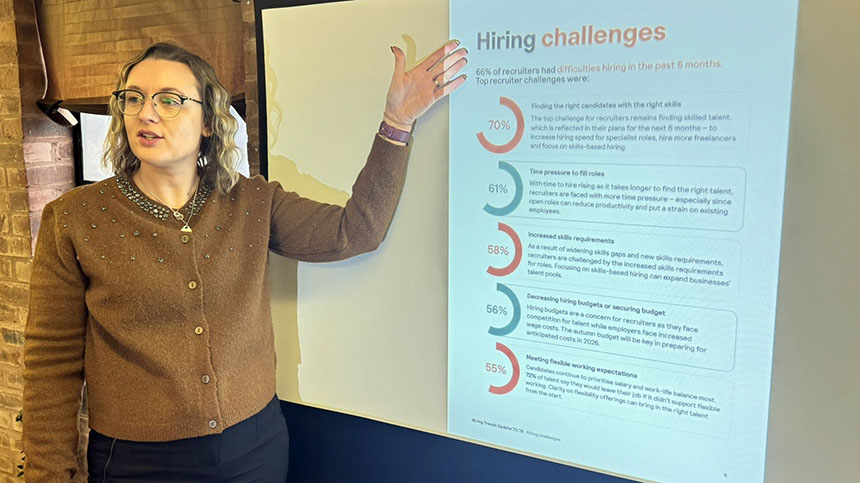
A key theme throughout 2025 was the widening gap between active and passive talent. While only 18% of candidates were actively job hunting, as many as 60% were open to new opportunities. According to Kayleigh Bradley, senior recruiter at the automotive recruitment specialists, this underlines the importance of pro-active engagement rather than reliance on applicants alone.
“When you look at the market as a whole, it’s clear that many of the best candidates aren’t actively applying,” Bradley said. “They’re open to conversations, but employers need strong outreach, clear messaging and competitive offers to access that wider pool.”
Salary remained the single biggest driver of career moves during the year. Average UK pay reached £42,531 in October, an 8.4% year-on-year increase, reinforcing the growing importance of pay benchmarking. For employers, competitive salary positioning proved critical; for candidates, understanding market value became an essential part of career planning.
2026 outlook is ‘broadly positive’
From a broader labour market perspective, conditions remained relatively balanced. Unemployment sat at around 5%, redundancy levels stayed low at approximately 4.5 per 1,000 employees, and vacancies edged up to around 723,000, indicating that while caution persists, opportunities remain readily available.
Workplace patterns also continued to evolve on the recruitment landscape. Field-based roles accounted for 46% of positions, with 27% office-based, while hybrid working rose to 18%, signalling a modest return to flexibility. Fully remote roles remained limited at 9%, reflecting ongoing demand for in-person capability across many industries.
Transparency emerged as another clear differentiator in 2025. Although fewer than half of job adverts included salary information, those that did attracted around 30% more applications, reinforcing the value of clarity and openness in recruitment.
Looking ahead to 2026, GCA believes the direction of travel is broadly positive. Employers who communicate clearly, move efficiently and offer competitive packages will continue to stand out, while candidates who remain visible, flexible and well-prepared are best placed to capitalise on opportunity.
