




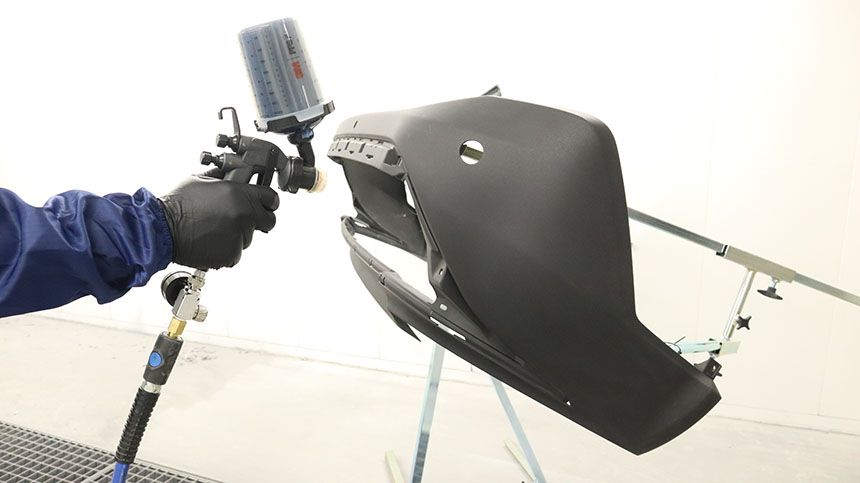
Plasnomic and its collaborative partners – 3M, 4Plastic, Mirka, PPG, Polyvance, and SEM – will initiate an industry-first Textured Parts Repair Pilot programme focused on textured plastic parts, one of the largest untapped repair opportunities in collision repair.
Mario Dimovski, president of Plasnomic and head of the Plasnomic Global Council, said: “This pilot represents a major step forward for the collision repair industry. Textured parts are being replaced every day when many could potentially be repaired. By bringing the industry together and technically validating products and processes, we can create a trusted framework that supports repair-first decisions, profitability, and sustainability.”
New textured parts repair pilot
According to global industry research, more than 95% of textured plastic parts are replaced, many with only minor scratches or repairable damage. At the same time, it has been found that textured parts are becoming higher-value components, with some small wheel arch moldings selling for more than US$300 (£225) and some lower bumper covers now costing more than the main bumper cover itself.
Plasnomic said this is adding further pressure to repair costs at a time when average repair prices continue to rise due to factors such as ADAS complexity, parts inflation, and skilled labour shortages.
The Textured Parts Repair Pilot will bring together leading collision repair groups, insurers, suppliers, and industry partners in the US, the UK and further afield to validate practical repair methods, evaluate repair-versus-replace opportunities, and measure commercial and sustainability outcomes.
Lab-based assessment
As part of the pilot, Plasnomic will test products currently available in the market. In line with Plasnomic’s technical evaluation process, products will undergo practical repair testing and lab-based assessment to determine performance, adhesion, weathering, durability, finish quality, texture appearance, and repair consistency.
The pilot aims to help bodyshops create more repair opportunities for their technicians and painters in an environment where claims volumes and repair economics remain under pressure. By adding labour sales operations instead of defaulting to new part replacement, bodyshops can improve gross profit, reduce parts spend, support repair-first outcomes, and strengthen overall business performance.
Representatives from Plasnomic said it is also a big win for the environment as each repair prevents that part from going into landfill.
Plasnomic is inviting feedback, referrals, and collaboration from Plasnomic Global Council members and industry stakeholders interested in helping shape the future of textured plastic repair.
