




Rear-end collisions under Euro NCAP scrutiny
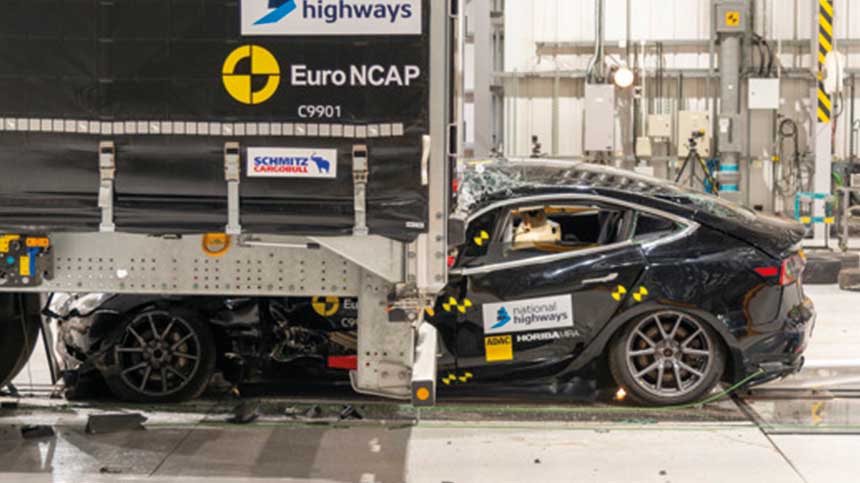
National Highways has carried out a series of crash tests with Euro NCAP around rear-end collisions between cars and heavy goods vehicles.
HGVs made up 10% of vehicles on England’s motorways and A roads but were involved in 19% of collisions where people were killed or seriously injured. Rear-end shunts accounted for 39% of these, with 160 collisions involving a smaller vehicle hitting the rear of an HGV and 18% of all serious or fatal HGV-related casualties resulting from this type of collision.
To explore vehicle safety measures in real-world conditions, National Highways and Euro NCAP has carried out two sets of tests.
The first looked at how emergency braking systems in cars detect different HGV trailers, with results showing these did not always detect trailers and therefore did not always activate.
The second crash test assessed the performance of rear underrun protection systems, which are metal bars fitted to the back of HGVs to stop cars going underneath in a collision, and found that some did not prevent cars from going underneath.
Vital research
Roads and buses minister Simon Lightwood said: “Every death on our roads is a tragedy, which is why I am pleased to see National Highways taking the initiative with this vital research.
“This will go hand in hand with our Road Safety Strategy – the first in over a decade – as part of our commitment to cut deaths and serious injuries on our roads by 65% by 2035.”
Sheena Hague, director of road safety at National Highways, said: “Collisions where smaller vehicles run into the back of HGVs can have devastating consequences. This testing helps build a clearer understanding of how and why they happen, so we can work with our partners to take practical steps to prevent them or reduce their impact.
“The freight industry is a vital part of our economy, and we work closely with hauliers and others to help keep all road users safe.”
