





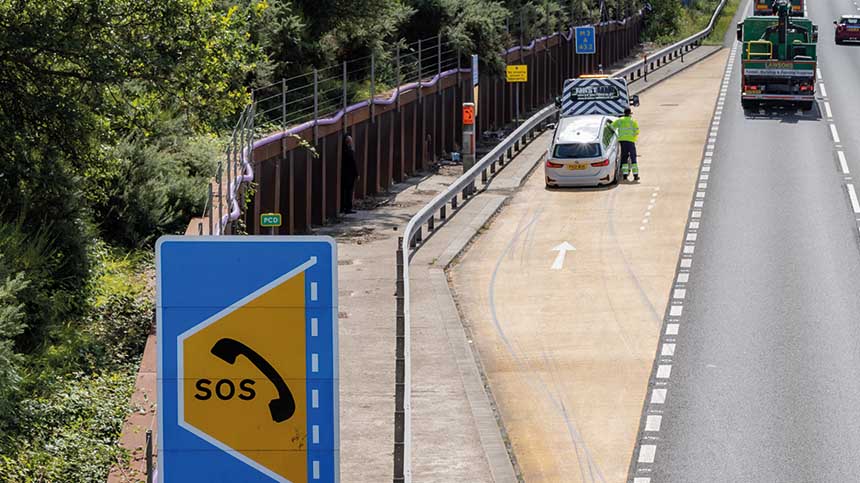
New analysis by The AA has revealed that many of the UK’s smart motorways have increased congestion and are losing money.
Based on data revealed in a National Highways report, it found that both the M25 All Lane Running section between junctions 23 to 27, and the M6 Dynamic Hard Shoulder are costing the UK economy and have been rated as ‘very poor’.
A further six are ‘not on track – poor’ or ‘not on track – low’ in terms of value for money.
The research has also found that converting the hard shoulder into a permanent or temporary running lane has reduced the speed of traffic and created more congestion, while safety benefits are also in doubt with two schemes showing an increase in the number of those killed or seriously injured by around a third.
Just three of the 16 schemes assessed are ‘on track’ with only one, the M25 between junctions 16 and 23, exceeding expectations.
Bad news
Edmund King, AA president, said: “After a lengthy wait, these reports finally see the light of day. The reluctant release of these documents, without any announcement feels like an attempt to bury bad news.
“This has been a catastrophic waste of time, money and effort. Many of the schemes have slower journeys which causes traffic jams, loses the country cash and worsened the safety record of motorways.
“Motorways which have been widened, the hard shoulder kept, and safety technology added have proved the most successful. We have been calling for this standard for so long and urge any government that looks to improve motorways to use this style as the blueprint.”
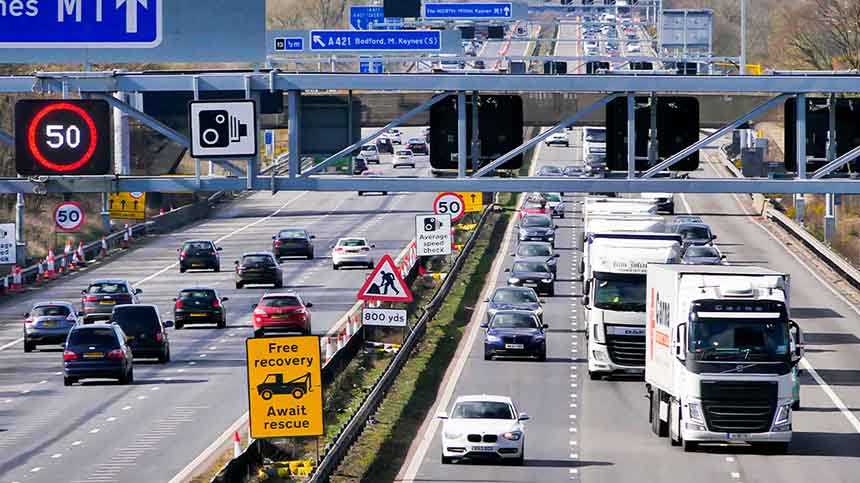
Types of smart motorways:
- Controlled Motorways – The retention of the hard shoulder, but with added safety technology and gantries
- Dynamic Hard Shoulders – The hard shoulder can be used as a running lane at peak times and periods of high congestion
- All Lane Running – The permanent conversion of the hard shoulder into a running lane with emergency areas spaced approximately every 0.75 miles apart
