





NBRA warns bodyshops of HSE isocyanate inspections
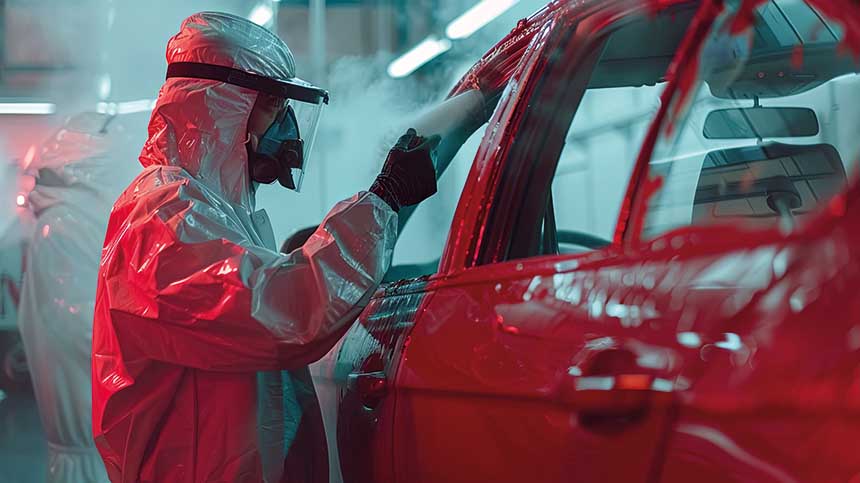
The National Body Repairers Association (NBRA) has warned repairers to prepare for isocyanate inspections from the Health and Safety Executive (HSE).
As part of a targeted isocyanates awareness campaign and inspections, HSE inspectors are now visiting sites to enforce compliance with the Control of Substances Hazardous to Health (COSHH) regulations.
It has said that failure to meet legal requirements regarding paint fumes and dust exposure will result in immediate enforcement action, including improvement notices, prohibition notices, or prosecution.
The inspections will specifically target three areas:
- Respiratory protective equipment
- Spraybooth ventilation
- Safe clearance procedures.

Respiratory protective equipment
The HSE has said that respiratory protective equipment compliance extends to all staff working in paint and preparation areas. Those working directly with isocyanate-based paints must use air-fed breathing apparatus, with standard particulate filters inadequate against these deadly fumes.
Meanwhile, HSE will also look at precautions for panel technicians, prep staff, and anyone rubbing down fillers or primers. It has said that technicians with facial hair that prevents a seal with conventional tight-fitting masks must wear battery-operated Powered Air-Purifying Respirators (PAPR) or alternative loose-fitting RPE.
Spraybooth ventilation
According to HSE regulations, all spraybooths must have adequate extraction and measured airflow to protect staff during and after spraying.
Safe clearance procedures
The HSE says clear, measurable clearance times must be visibly displayed and strictly followed before anyone re-enters a booth after spraying is completed.
Meanwhile, bodyshops are also required to arrange regular health surveillance and biological monitoring for all relevant employees to verify that control measures are actually effective and to detect early exposure.
The NBRA has reminded now reminded managing directors, owners and managers to take immediate steps to review controls, training and equipment to protect their businesses from HSE penalties.
This means ensuring the right air-fed breathing apparatus is being used for spraying and appropriate PAPR/loose-fitting RPE is available for prep staff with facial hair, workers are properly trained on how to use their RPE, and regular biological monitoring takes place.
