



Pothole repairs bill rises to £16.8bn, says AIA

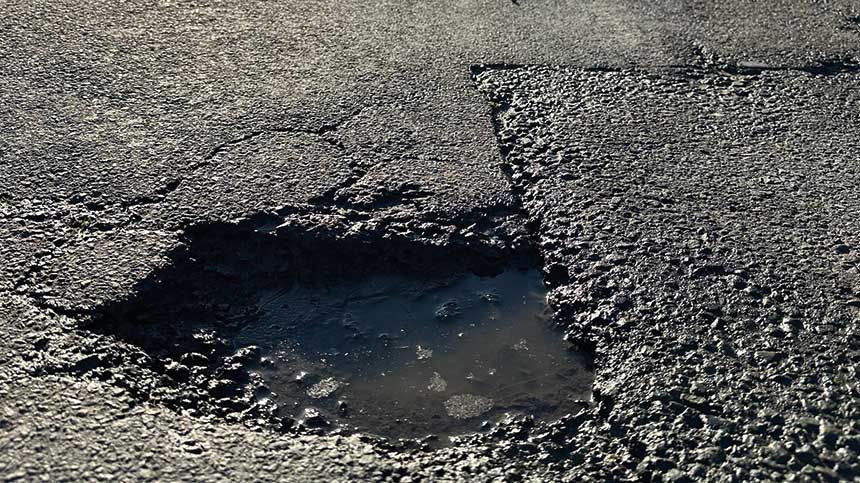
New figures have revealed that the cost of clearing the backlog of pothole repairs on roads in England and Wales has risen to £16.8bn.
This is despite an estimated 17.5 million potholes being fixed in the last decade, which equates to one every eight seconds.
The figures have been released by the Asphalt Industry Alliance (AIA) to coincide with National Pothole Day.
David Giles, AIA chair, said: “The backlog of local road repairs in England and Wales stands at an eye-watering £16.bn, so it’s not surprising that moaning about potholes has become a national pastime for road users.”
National embarrassment
“Data from the AIA’s Annual Local Authority Road Maintenance (ALARM) survey reports that 17.5 million potholes have been filled in the last decade in England and Wales, yet the condition of our local roads continues to be a cause of national embarrassment.
“If we want to see an improvement in the condition and resilience of our local roads, the focus needs to shift away from an endless cycle of pothole patch and repair by giving local authority highway engineers the tools they need to do the job so they don’t form in the first place.”
Different approach
Giles continued: “Early in the New Year, the Prime Minister promised to use ‘every tool’ to make lives better for people living in Britain and investing in our local roads is one way to do just that, as improvements are immediately noticeable to taxpayers.
“We have long been calling for a different approach to government funding to enable this, advocating both a longer-term funding horizon and more transparency to give local authority highway engineers the certainty of funding needed to carry out the right maintenance intervention at the right time for the greatest long term benefit.
“That’s why we welcomed the Transport Secretary’s Autumn Budget announcement that £7.3bn has been allocated over the next four years to local highway maintenance.
“While it’s not a silver bullet that will eradicate the backlog of repairs, it is a positive first step and will support local highway engineers in their efforts to stem the long-term decline of our local roads.”
