



Thatcham reveals key findings from Tesla mega casting study
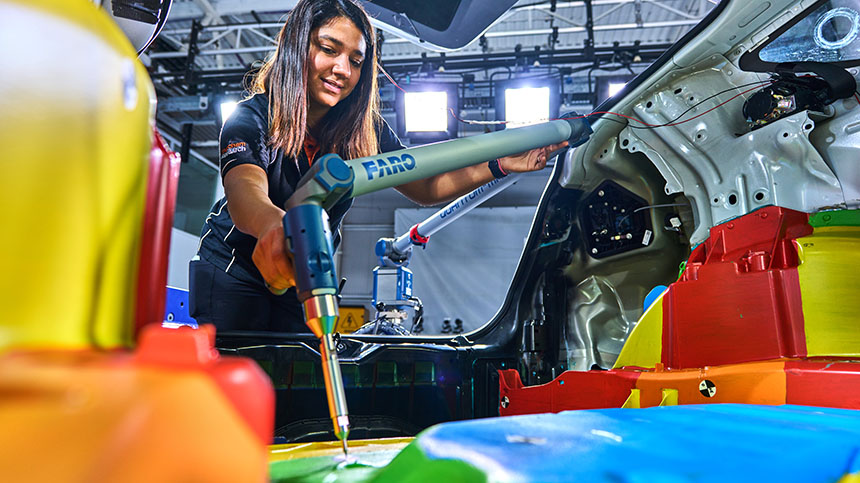
A new report from Thatcham Research, following a two-year Tesla mega casting study, has revealed that vehicles incorporating aluminium mega cast technology can deliver substantial repair cost savings compared to traditional multi-piece steel constructions, challenging early industry concerns about repairability.
The study has been conducted at the headquarters of Thatcham Research in Berkshire, UK where Tesla Model Y vehicles, which feature a single piece, aluminium rear floor section, have been subjected to a series of physical crash tests, followed by damage assessments and repair technique tests.
Tesla mega casting study
The Tesla Model Y’s one-piece, mega cast rear chassis section, consolidates around 70 individual components into a single aluminium casting, to reduce manufacturing time, cost and environmental impact. Thatcham Research’s work shows that this technique, which several other vehicle manufacturers are planning to introduce, can also reduce repair costs in both partial and full replacement scenarios when compared to conventional steel, multi-piece vehicle structures.
Richard Billyeald, chief research and operations officer at Thatcham, said of the Tesla mega casting study:
“Our research demonstrates that mega cast technology when properly implemented with comprehensive repair guidelines, can deliver significant benefits for insurers, consumers and the environment. The Tesla Model Y’s repair costs were consistently lower than comparable vehicles with traditional construction while maintaining structural integrity and repairability standards, which reduces the chances of a vehicle being written off in common accidents, improving its lifecycle CO2 benefits.”
The investigation, designed to simulate damage from real-world claims collected from UK insurers and conducted in co-operation with Allianz Centre for Technology (AZT) in Germany, subjected vehicles to controlled impact tests at varying severities to assess both damageability and repairability characteristics.
Comparative analysis revealed that the Model Y’s mega cast construction delivered consistent cost advantages across multiple scenarios. Partial replacements cost £2,167 less than the Model 3’s traditional multi-part steel rear sub-assembly construction, while full replacements saved £519. Similar patterns emerged when comparing against other manufacturers’ vehicles, with the Model Y demonstrating lower repair costs than other models, including the Mercedes EQE, Hyundai IONIQ 5, and several internal combustion engine vehicles.
Darren Bright, principal engineer-automotive repair at Thatcham, said: “The key insight from our testing is that vehicle manufacturers must integrate repairability into the design of a mega cast component. In Tesla’s case, the inclusion of replaceable cast rear rail assemblies at just £31 each provides a cost-effective solution for minor impacts, while the relatively low cost of full replacement mitigates concerns about more severe damage scenarios.
Without this provision of reasonably priced partial and full replacement parts and the associated repair procedures, our findings would have been very different.”
Repair industry implications
The mega cast chassis has important implications for sustainability. In practical terms, lower repair costs mean that damage which might have resulted in a total loss on a traditionally constructed vehicle is now more likely to be economically repairable. Fewer write-offs translate to more vehicles remaining in service after collisions, preserving the energy and materials already invested in their manufacture and delaying the environmental cost of early replacement.
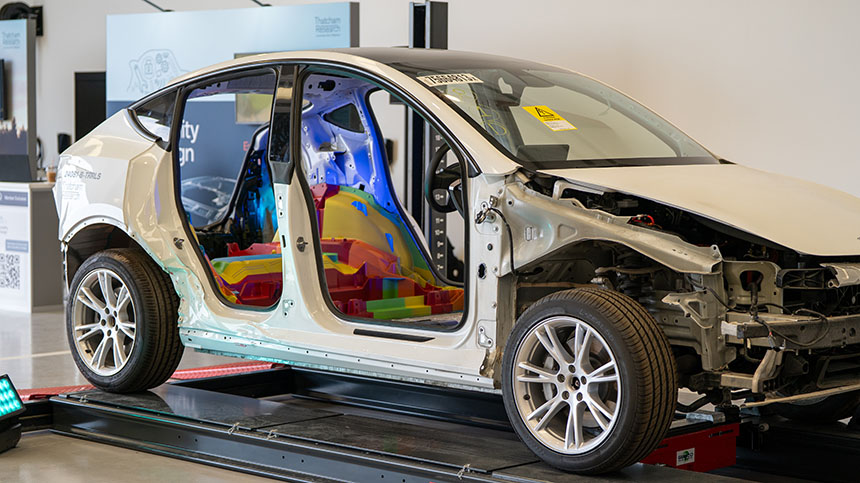
With manufacturers including Toyota, Volkswagen, Volvo, and Hyundai announcing mega cast implementation plans, the research provides essential benchmarking data. Toyota’s planned implementation will replace 177 components across front and rear castings, while Volvo’s single-floor pan cast will consolidate 100 components.
Billyeald said: “Tesla has established important precedents for mega cast repairability, but our research highlights areas requiring industry-wide standardisation. As this technology proliferates, establishing comprehensive repair protocols, non-destructive test procedures, and technician training programmes will be essential for maintaining vehicle safety, insurance and lifecycle sustainability.”
Thatcham Research’s findings will inform the development of repair guidelines, training programmes, and industry standards as the UK automotive sector prepares for this technological shift. The organisation is developing comprehensive documentation to enhance the industry’s existing understanding of mega cast implications and will continue to monitor and evaluate new mega cast implementations as they emerge in the UK market.
Tesla Model Y Testing Deep Dive
In low severity testing at 15km/h, the mega cast exceeded expectations by sustaining no structural damage, allowing complete vehicle repair without any work required on the mega cast component itself. These findings challenge initial industry concerns about the vulnerability of large single-piece castings to minor impacts.
Medium severity testing at 25km/h necessitated full mega cast replacement due to crack propagation and structural misalignment. However, at £716 for the replacement component, the total repair cost remained competitive with, and often below, traditional repair methods for equivalent damage.
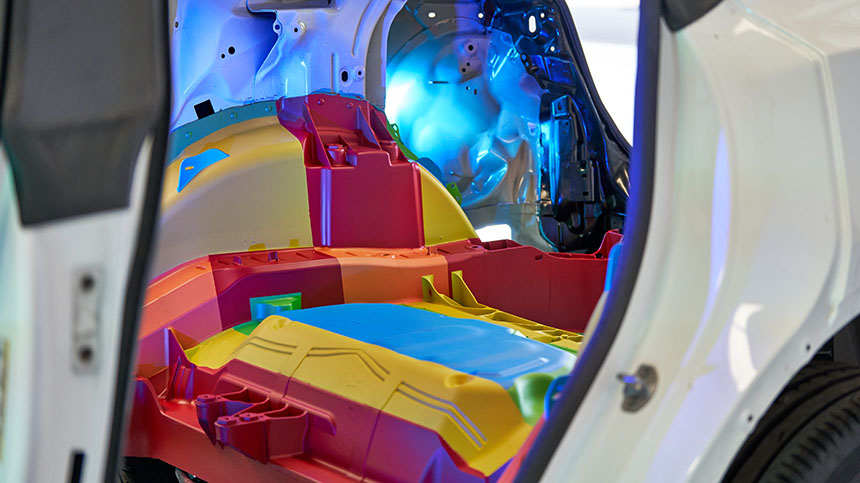
The research highlighted key considerations, including the fact that repairs requiring welding of the aluminium mega cast structure must be conducted at Tesla-approved facilities, raising questions about repair network capability as the technology becomes widespread. This requirement could necessitate vehicle transportation between repair centres if the initial facility lacks appropriate certification, potentially adding time and expense to the repair process. Additionally, the scale and irregular shape of these mega cast components present handling challenges for smaller body shops.
The study underscored the importance of implementing clearer non-destructive testing (NDT) procedures to effectively identify potential damage in the mega cast structure that may not be visible to the naked eye. This enhancement would ensure a more thorough assessment and safeguard the integrity of the structure.
The full research report following the Tesla mega casting study is available to Thatcham Research members and includes detailed technical specifications, repair cost comparisons, and recommendations for insurers and repairers preparing for the mega cast era.
Note: In the Tesla mega casting study, Thatcham Research said that a mega cast, or mega casting, refers to a manufacturing technique characterised by the production of single-piece components through large High-Pressure Die Casting (HPDC) machines. In this process, molten metal, usually aluminium, is injected into a high-pressure mould, transforming it rapidly into solid, near-net-shape components.
