



JLR cyber attack drags UK car production down 27%
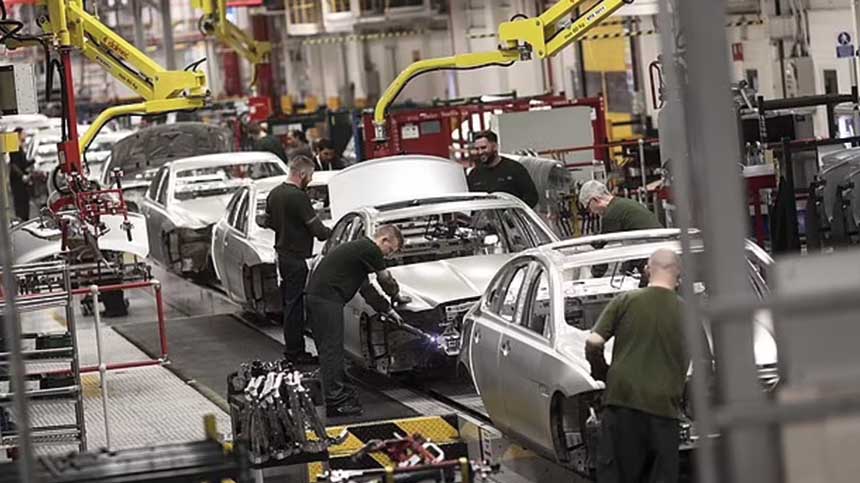
The cyber attack on Jaguar Land Rover dragged overall UK car production down 27% in September.
Other volume manufacturers reported a growth in production, but this was not enough to offset the dramatic decline at Britain’s largest automotive employer.
According to the Society of Motor Manufacturers and Traders (SMMT), 51,090 units left factory gates during the month, 48% of which were either battery electric, plug-in hybrid or hybrid.
Meanwhile, car production for the UK market fell by 34.1% to 12,269 units while exports declined 24.5% to 38,821.
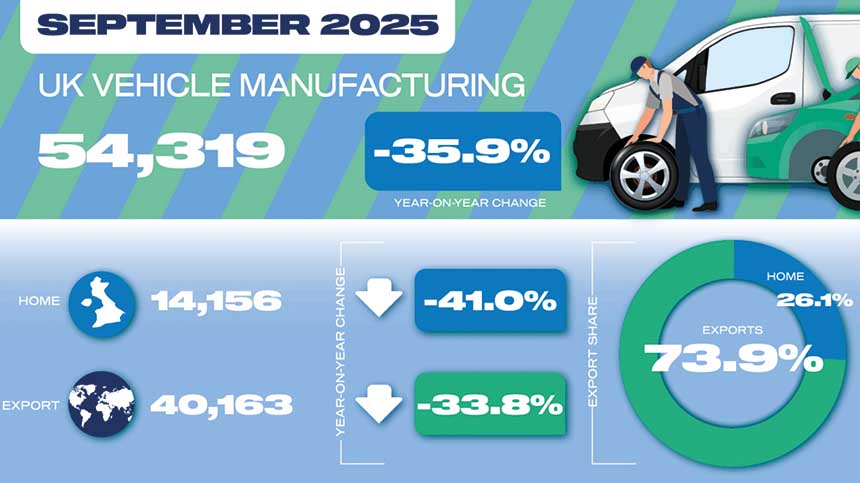
The SMMT has also reported that commercial vehicle (CV) production declined for the sixth month in a row. It was down by 77.9% to just 3,229 units.
Autumn Budget
These figures come ahead of the Autumn Budget on 26 November, with the sector warning of severe and lasting damage to jobs and the industry’s competitiveness if plans to end critical Employee Car Ownership Schemes (ECOS) go ahead.
New analysis by SMMT reveals that 60,000 automotive manufacturing workers could be affected, but it believes the impacts would spread even wider, with 80,000 fewer new car sales per annum, irrevocable damage to the nearly new and used markets, and an equally significant reduction in UK production volumes of up to 20,000 cars.
Such a reduction would amount to a loss of more than £1bn in revenue, putting some 5,000 manufacturing jobs at risk, and a near half billion-pound hit to government finances from lost VAT and Vehicle Excise Duty receipts.
ECOS
Mike Hawes, SMMT chief executive, said: “September’s performance comes as no surprise given the total loss of production at Britain’s biggest automotive employer following a cyber incident. While the situation has improved, the sector remains under immense pressure.
“The Industrial Strategy, launched by the Prime Minister, Business Secretary and Chancellor only in June, sought to align government policies towards growth and restore UK vehicle output to 1.3 million units per annum.
“The move to scrap ECOS immediately puts that ambition in doubt and must be reversed given the damage it will inflict on the sector and exchequer revenues.”
