


Updated: Autumn Budget – automotive industry responds
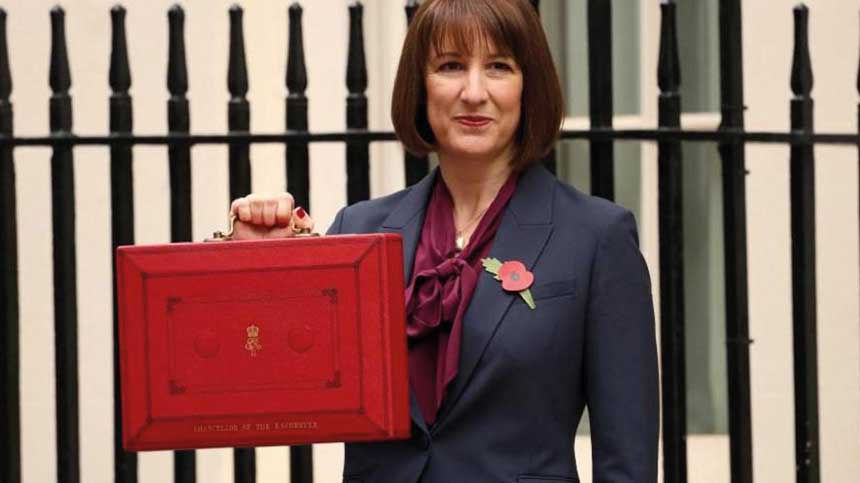
The automotive industry has responded to the Autumn Budget, delivered today by Chancellor Rachel Reeves.
As part of the Budget, the government has announced an electric vehicle pay-per-mile tax, and increase of the Expensive Car Supplement from £40,000 to £50,000, plus a further £1.3bn for the Electric Car Grant.
It has also delayed scrapping the Employee Car Ownership Scheme until April 2030 and maintained a freeze on fuel duty at 5p per litre until next September.
However, the Budget did not include any reforms to the Apprenticeship Levy, or any dedicated support for training to help the aftermarket adapt to increasing numbers of electric vehicles, although it did announce free apprenticeships for under 25s and a rise in the minimum apprenticeship salary to £8.
SMMT
Mike Hawes, CEO, said: “Government has recognised the automotive industry as a pillar of national strategic importance, backing it with an industrial strategy and additional £1.5bn to drive competitiveness and investment. Deferring the end of employee car ownership schemes into the next parliament, meanwhile, will be welcomed by workers across the sector.
“Changes to the VED expensive car supplement are welcome, as is the additional £1.3bn funding for the Electric Car Grant and support for charging infrastructure.
“These will help, but will not offset the impact of introducing a new electric-Vehicle Excise Duty – the wrong measure at the wrong time.
“Manufacturers have invested to bring more than 150 EV models to market. However, the pressure to deliver the world’s most ambitious zero emission vehicle sales targets is intense. With even the OBR warning this new tax will undermine demand, government must work with industry to reduce the cost of compliance and protect the UK’s investment appeal.”

IMI
Nick Connor, CEO, said: “The IMI is delighted that our pre-budget call for action to improve access to apprenticeships has been partly addressed in today’s Budget. With the introduction of free apprenticeships for under 25s in SMEs, this is a significant step for a sector where 96,000 small and medium sized businesses play such a critical role.
“The IMI has continually raised with government the difficulties SMEs face in navigating the Levy system, so this is an incredibly welcome move.
“Our sector has experienced a 30% decline in apprenticeship starts since 2018/19, an average loss of over 500 apprenticeships per year. And this decline has restricted the flow of new skilled workers entering our workforce, adding pressure to already tight recruitment pipelines across technical and specialist roles.
“We were also encouraged by the announcement made before the budget that the minimum Apprenticeship Pay will rise to £8 per hour from April next year. This undoubtedly will also help with attracting young people to apprenticeships.
“But the IMI is concerned that investment in electric vehicles continues to only focus on charging infrastructure and manufacturing. When will the government recognise the critical role of the aftermarket in giving businesses and consumers the confidence to switch to EVs? It is vital that specific funding is provided for the training that will be critical for the automotive workforce to transition to support net zero mobility.”

The AA
Edmund King, president, said: “The Budget has put drivers at a fork in the road with the Chancellor announcing major tax proposals for EV owners. Drivers fully understand that the government needs to get the balance right between raising cash for roads investment, whilst ensuring it doesn’t slow down the transition to electric cars in order to meet environmental targets.
“Getting the timing right is crucial, and there will be concerns that should pay-per-mile for EVs be introduced too soon it may put slow down the switch to electric cars.
“Drivers will naturally have questions about such a scheme, which is why The AA will lead the charge for a fair and transparent system which is easy to understand.”

RAC
Simon Williams, RAC head of policy, said: “The government will be aware that taxing all plug-in vehicles per mile from 2028 could slow down the transition to electric vehicles. This is no doubt why it has expanded the Electric Car Grant.
“With fuel duty revenue set to decline as more EVs come on to the road, this is one lever the Chancellor clearly feels she can pull to keep the money coming in. The implementation will be critical, so the devil is very much in the details.
“We note the government hasn’t cut VAT on public charging from 20% to 5% to match the rate levied on domestic electricity. This means drivers who can’t charge at home will continue to pay more.”
NFDA
Sue Robinson, CEO, said: “The announcement made today by the Chancellor provide some optimism, for instance freezing fuel duty, but it also underlines that in many areas the government continues to fall short in delivering meaningful support for the automotive industry, such as the pay-per-mile tax.
“Introducing additional costs for EV drivers risks undermining consumer confidence at a critical moment for the electric vehicle market. The Office for Budget Responsibility estimate that this tax will result in £440,000 fewer EV sales, harming franchised dealer’s ability to sell and reach ZEV mandate targets.
“It is also concerning that, once again, the Chancellor has failed to reform the existing Apprenticeship Levy in this latest fiscal event. It is frustrating to repeatedly call for changes to the Levy without seeing measures that instil confidence in its effectiveness.”

Auto Trader
Ian Plummer, chief commercial officer, said: “On electric vehicles, the Chancellor is driving with the handbrake on. The Office for Budget Responsibility estimates that there will be 440,000 fewer electric cars on the road thanks to the introduction pay-per-mile charging from 2028.
“This sends completely the wrong signal as only 130,000 of these sales are offset by moves to make EVs more affordable, such as raising the Expensive Car Supplement from £40,000 to £50,000.”
FLA
Shanika Amarasekara, CEO, said: “The Chancellor’s announcement is a pragmatic step forward, and we welcome the interim 40% first-year allowance for leased assets. While the Budget does not go as far as we and our members would have liked, it is clear that the principle of including leasing within full expensing has now been accepted by Government.
“In a challenging fiscal environment, this is a sensible holding position that supports business investment while wider reforms are developed. Leasing plays a critical role in enabling firms to invest in the equipment and technology they need—flexibly, cost-effectively, and in a way that aligns with how businesses choose to manage their cashflow and risk.
“We look forward to continuing our work with HM Treasury and HMRC to deliver the full expensing framework that will maximise growth and ensure firms can access the funding tools that best support their ambitions.”
IAAF
Mark Field, CEO, said: “The automotive aftermarket is significantly the largest element of the UK automotive sector, and the budget does nothing to support the thousands of businesses that deliver affordable mobility to the millions of motorists every day.
“We’re an aftermarket, not an afterthought and short-term thinking by successive governments has now meant £4bn of grants to sell electric vehicles that not everybody wants or can afford. Even more remarkable is this government’s plan to charge the ones that do, with a pay per mile tax on EVs. This will further reduce EV adoption.
“Instead of dumbing down EV adoption by subsidising the price of cars, we should be supporting businesses and programmes that deliver on the sensible notion that a technology neutral approach to future mobility is the best way to ensure effective consumer choice and affordable motoring.”